 Rummy Skill
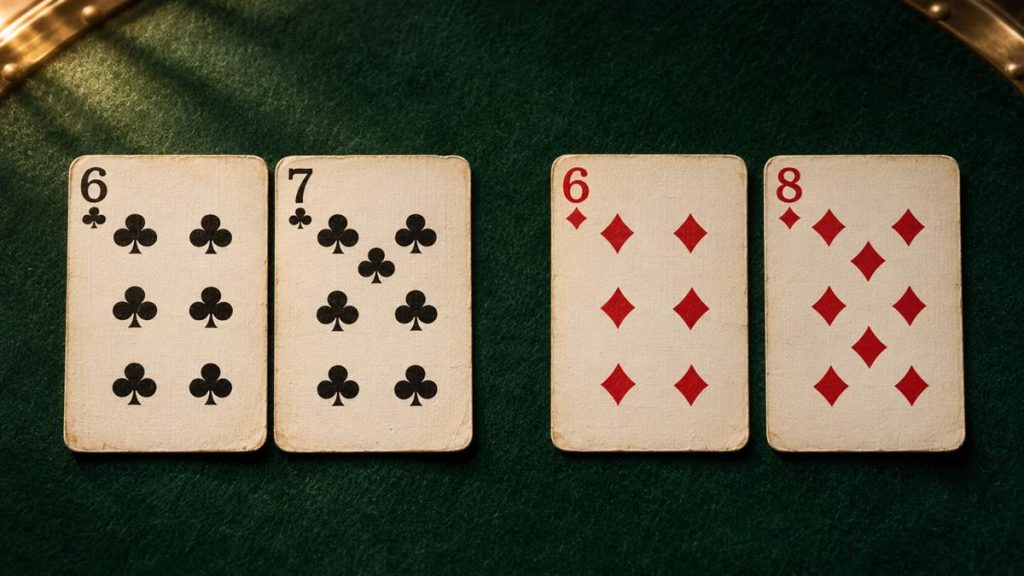
Compare a connected pair with a one-card gap, then see how visible discards change the decision.
You are choosing between 6♣–7♣ and 6♦–8♦ while looking for a natural sequence. Which pair would you keep if the rest of the hand gave you no reason to favour either suit?
Name the exact cards
Put 5♣ on the left of the clubs or 8♣ on the right. Either card completes a three-card run. With the diamonds, try the same test. A 5♦ gives you 5♦–6♦ and a separate 8♦. A 9♦ gives you 8♦–9♦ and a separate 6♦. Only 7♦ fills the gap in one draw.
Use the deck you are actually playing
In a two-deck game, two different card names do not necessarily mean two available cards. Suppose both copies of 5♣ and one copy of 8♣ are already visible outside your hand and unavailable to draw. Only one copy of 8♣ remains unaccounted for. If neither 7♦ has appeared, the diamond gap has two unaccounted-for copies.
Those copies could be in another hand. You have counted candidates, without assuming they are sitting in the stock. Try the exercise again after the next discard. Cross off only a physical copy you can account for.
Rules reference · Rummy.com’s illustrated rules and card values.